
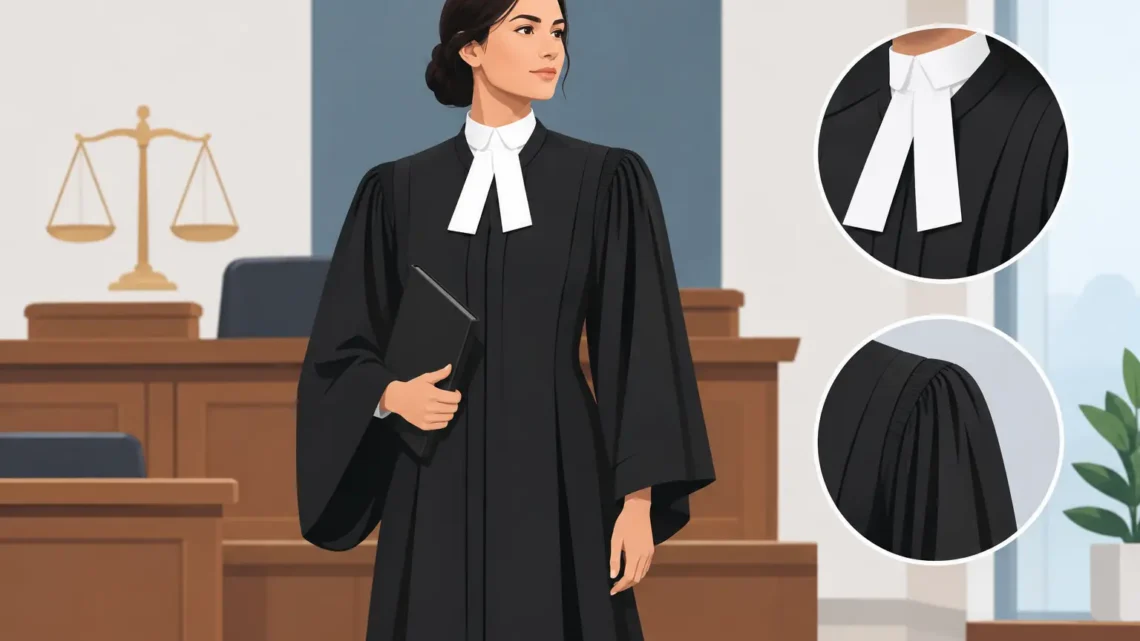
Judicial Attire That Balances Tradition and Fit
October 13, 2026A judge may wear the same robe for a brief motion hearing, a full day of trials, a ceremonial session, or an official portrait. Judicial attire must therefore do more than look appropriate from the bench. It must communicate impartiality and authority while allowing the wearer to move, sit, reach for files, and remain comfortable through demanding court schedules.
For courts, chambers, and individual judicial officers, the right robe is not a generic black garment. Its fabric, cut, sleeves, closure, and finish all affect how it performs over years of regular use. A well-made judicial robe supports the dignity of the office without becoming a distraction.
Why Judicial Attire Still Carries Weight
Judicial robes create a deliberate visual distinction between the person and the office. In a courtroom, that distinction helps reinforce the formality of proceedings and the expectation that decisions are made according to law rather than personal preference. The robe is not intended as decoration. Its restraint is part of its purpose.
Black remains the customary choice for many federal, state, and local courts, but requirements can differ by jurisdiction, court type, and ceremonial practice. Some courts may specify a particular style, while others permit more individual choice in sleeve treatment, pleating, or other tailored details. Before ordering, judicial officers should review any local rules, administrative guidance, or established court customs.
Within those boundaries, quality matters. A robe that hangs cleanly, retains its shape, and fits the wearer properly presents a composed appearance. A robe that pulls across the shoulders, catches at the knees when seated, or has sleeves that interfere with daily work can undermine comfort and confidence.
What Defines a Quality Judicial Robe
The finest judicial attire begins with proportion. Robes are designed to fall gracefully from the shoulders and provide enough fullness for seated wear. The garment should drape rather than cling, with sufficient room across the chest, upper back, and sleeves for natural movement over professional clothing.
Fabric should match the workday
Fabric selection is one of the most practical decisions in a judicial robe. A lighter-weight material can be a sensible choice in warm courtrooms, busy calendars, or regions with higher temperatures. A more substantial fabric offers a crisp, formal drape and may be preferred for colder environments, ceremonial proceedings, and frequent public appearances.
The best choice depends on how and where the robe will be worn. A judge who spends long days on the bench may prioritize breathability and ease of movement. A judicial officer whose robe is primarily used for formal hearings or portraits may prefer a heavier material with more structure. Durability should remain central in either case, particularly for garments worn multiple times each week.
The cut determines comfort and presence
A robe’s silhouette comes from its construction, not simply its size. Full-cut body panels allow the fabric to fall properly when standing and sitting. Carefully shaped shoulders help the robe stay in place, while generously cut sleeves prevent restriction when handling exhibits, reviewing documents, or addressing the courtroom.
Pleating is both a visual and functional feature. It can add fullness, movement, and a more traditional appearance, but the appropriate degree of pleating depends on the selected style and the wearer’s preference. Some judicial officers prefer a clean, streamlined front; others favor the formal depth and drape of a more traditional robe construction.
Sleeve style also affects the final appearance. Traditional bell sleeves create a recognizable judicial profile, while other sleeve treatments may offer a more tailored look. There is no universal answer beyond applicable court requirements. The right selection should be consistent with the setting and comfortable for the wearer’s regular duties.
Details should serve a purpose
Functional tailoring can make a significant difference during a long court day. Deep side openings can improve access to trouser pockets. Interior pockets offer a secure place for small personal items. A properly positioned front closure keeps the robe aligned when the wearer rises, walks, and returns to the bench.
These details are easy to overlook in a catalog image, yet they often determine whether a robe becomes a dependable professional garment. Buyers should consider how they actually work: whether they carry a phone, need access to notes, wear a microphone, or move frequently between chambers and the courtroom.
Getting the Fit Right
Judicial robes should be measured over the clothing typically worn in court. Measuring only over a shirt or lightweight layer can produce a robe that feels tight once worn over a suit, dress, jacket, or seasonal layers. A professional fit starts with accurate information about height, chest or bust, waist, hip, shoulder width, sleeve length, and preferred finished robe length.
Length deserves particular attention. A robe that is too short may appear undersized when the wearer stands. One that is too long can catch underfoot on stairs, in hallways, or around the bench. The hem should allow the wearer to walk naturally while preserving the formal, full-length appearance expected of judicial attire.
Custom sizing is especially valuable when standard sizing cannot account for an individual’s proportions. Height alone does not determine fit. Two people of the same height may need different shoulder dimensions, sleeve lengths, body widths, or robe lengths. Made-to-specification tailoring can address those differences without compromising the traditional shape of the garment.
When measuring, it is wise to have another person assist. Keep the tape measure level and avoid pulling it too tightly. If a robe will be worn over a specific type of professional attire, take measurements while wearing comparable clothing. For institutional or court purchasing, collecting measurements with one consistent process reduces preventable fit issues across an order.
Customization With Appropriate Restraint
A judicial robe is a professional uniform of office, so customization should be thoughtful. The goal is to achieve proper fit, useful function, and a distinguished finish, not to overdesign the garment. Custom options may include fabric weight, sleeve style, pocket placement, closure treatment, pleating, and made-to-measure adjustments.
Embroidery or other identifying elements may be suitable in limited ceremonial circumstances, but they should be considered in light of court policy and tradition. Many judicial settings call for a robe that remains visually simple. When in doubt, a classic black robe with expert tailoring is the most enduring choice.
For courts placing coordinated orders, consistency is often as important as individual fit. Matching fabric, color, and core styling help create a unified appearance for ceremonial sessions, investitures, and official court events. At the same time, a supplier should be able to accommodate distinct measurements and functional preferences for each wearer.
Care That Protects the Garment
Judicial robes are expected to retain a polished appearance over time. Proper storage is the first step. Hang the robe on a sturdy, broad hanger that supports the shoulders, and give it enough closet space to prevent deep creases. A breathable garment bag can help protect the fabric during travel or seasonal storage.
After a long day, allow the robe to air before enclosing it in a bag. Address spills promptly according to the fabric’s care instructions, and rely on professional cleaning when recommended for the material and construction. Avoid folding a robe for extended periods, especially if it has pleats or structured sleeve details that can develop stubborn creases.
It is also useful to inspect the robe periodically. Check hems, closures, pockets, and sleeve seams before a major proceeding or ceremony. Small repairs handled early can extend the service life of a quality garment and prevent an inconvenient issue on an important day.
Choosing a Supplier for Judicial Attire
Judicial apparel requires more than basic garment production. A qualified supplier should understand formal robe construction, offer clear measurement guidance, provide fabric and styling choices, and have the capacity to produce individual custom robes as well as coordinated institutional orders.
Experience matters because the smallest construction decisions affect the final result. Shoulder balance, sleeve fullness, hem length, pocket placement, and front closure alignment must work together. Academic Apparel brings decades of ceremonial apparel manufacturing experience to judicial robes designed for professional presentation, long-term wear, and individualized fit.
Before placing an order, confirm the expected delivery schedule, measurement process, available customization options, and care recommendations. If the robe is needed for an investiture, swearing-in, portrait session, or scheduled court term, allow time for tailoring and any necessary adjustments.
A judicial robe should feel settled the moment it is worn: balanced at the shoulders, comfortable at the bench, and composed in every formal setting. Choosing with those practical standards in mind helps ensure the garment serves the office with the quiet authority the courtroom requires.